


Standard Curtain Lengths & Sizes: The Complete Guide (2026)
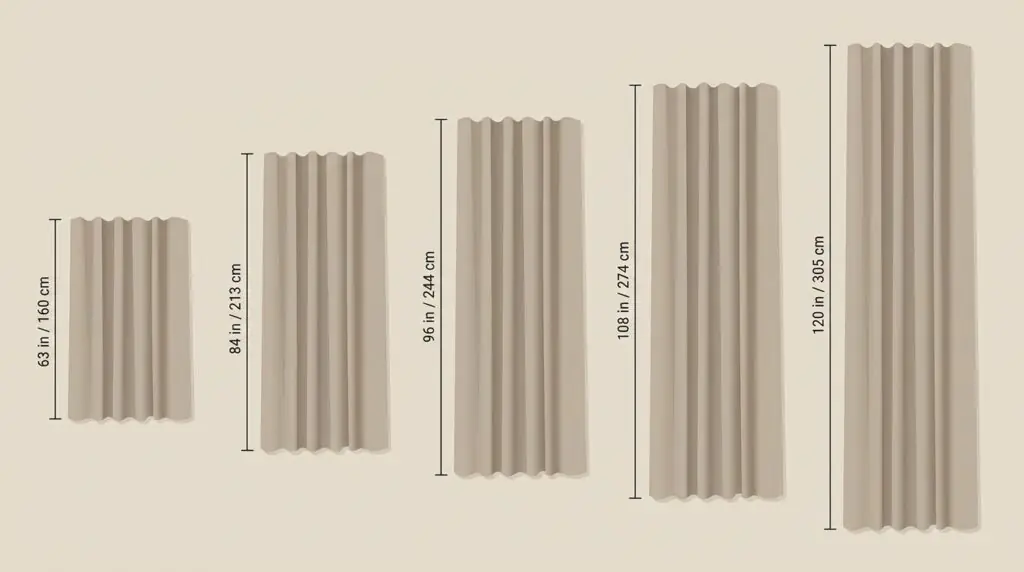
Standard curtain lengths are 63, 84, 96, 108, and 120 inches (160–305 cm), while standard curtain width usually runs from 44 to 118 inches depending on the panel. Knowing these standard curtain sizes helps you pick curtains that fit your windows correctly the first time, without guesswork, remeasuring, or costly returns.
Whether you’re dressing a small bedroom window or floor-to-ceiling glass doors in a Dubai apartment, this guide breaks down every standard curtain length and curtain size so you can shop with confidence — and shows you exactly how to measure your own windows in minutes.
What Are the Standard Curtain Lengths?
Most curtain retailers sell panels in five standard curtain lengths. These sizes exist because they match the most common ceiling heights and window styles found in homes and apartments, so you rarely need a custom order unless your windows are unusually tall.
| Length | In cm | Best For |
| 63 inches | 160 cm | Small windows, kitchens, cafe-style curtains |
| 84 inches | 213 cm | Standard windows, most living rooms and bedrooms |
| 96 inches | 244 cm | Windows with high sills, 8–9 ft ceilings |
| 108 inches | 274 cm | 9–10 ft ceilings, floor-to-ceiling look |
| 120 inches | 305 cm | 10 ft+ ceilings, dramatic full-length drapery |
If your ceiling height falls between two of these standard curtain lengths, round up rather than down. A curtain that’s slightly too long can be tailored or hung higher; one that’s too short will always look unfinished.
Standard Curtain Sizes (Width x Length) Explained
Curtain sizes are always written as width x length, with width listed first. A single unlined panel is usually 44–46 inches wide, but for a full, gathered look, interior designers recommend a fullness ratio of 2 to 2.5 times your rod width — meaning you’ll often need two or more panels per window.
| Panel Width | Typical Use |
| 44–46 inches | Single narrow window panel |
| 54–58 inches | Wider windows, better gathered fullness |
| 84–118 inches | https://curtaincrewdxw.ae/linen-curtain-fabric/Patio doors, wide living-room windows, room dividers |
As a simple rule of thumb: multiply your window or rod width by 2 to 2.5 to get the total fabric width you need across all panels combined, then divide by the panel width to know how many panels to buy.
How to Measure Curtain Length Correctly
Getting an accurate curtain length measurement takes less than five minutes with a metal tape measure, a step stool, and a helper (optional but useful).
- Install or mark your curtain rod first — length is always measured from the rod, not the window frame.
- Hook the tape measure at the exact point the curtain rings or hooks will sit.
- Measure straight down to your chosen finish point: sill, floor, or puddle (see the next section).
- Record the number in inches and round up to the nearest standard curtain length (63, 84, 96, 108, or 120).
- Measure both the left and right sides of the window separately — floors and ceilings are rarely perfectly level.
For curtain width, measure your rod’s total length (finial to finial), then multiply by 2–2.5 for the fullness ratio described above
Standard Window Curtain Sizes for Different Rooms
The right standard curtain size also depends on the room. Here’s a quick reference for the most common spaces:
Bedroom: 84–108-inch floor-length curtains, often paired with blackout lining for better sleep.
Living room: 96–120 inch curtains for a taller, more dramatic look, especially with high ceilings.
Kitchen: 63-inch sill-length or cafe curtains, which stay clear of counters and sinks.
Bathroom: short 36–63 inch panels or moisture-resistant blinds paired with curtains for style.
Home office: 84-inch curtains with a light-filtering fabric to reduce glare without blocking natural light.
Curtain Drop Length: Floor, Sill, and Puddle Styles Explained
The curtain drop length — where the fabric ends — changes the entire mood of a room, and it’s one of the most common points of confusion when choosing a standard curtain length.
Sill-length (apron): Ends just below the windowsill, around 63–72 inches. Practical and tidy, ideal for kitchens and casual spaces.
Floor-length (kiss the floor): Just grazes the floor, typically 84–96 inches. The most popular choice for living rooms and bedrooms.
Puddle: Extends 2–6 inches beyond the floor for a soft, luxurious fold, usually 108–120 inches. Best for formal dining rooms and statement windows.
A common styling mistake is hanging curtains that stop a few inches above the floor without meaning to — this makes windows and ceilings look shorter than they are. When in doubt, always size up.
How to Choose the Right Curtain Length for Your Windows
Beyond the standard curtain lengths and sizes above, a few final checks will make sure your curtains look intentional rather than accidental:
Hang the rod 4–6 inches above the window frame (or closer to the ceiling) to make windows appear taller.
Extend the rod 4–8 inches beyond each side of the window frame so panels don’t block light when open.
Match curtain weight to the drop length — heavier fabrics (velvet, blackout) suit floor-length and puddle styles, while lighter linen or sheer fabric suits sill-length curtains.
For 10-foot-plus ceilings, hang curtains close to the ceiling line rather than just above the window to maximize height.
Common Curtain Sizing Mistakes to Avoid
Even with a clear standard curtain size chart, a few small errors account for most sizing complaints. Watch out for these before you order:
Measuring the window frame instead of the rod — curtain length is always taken from where the rod or track sits, which is often several inches above the frame.
Buying only one panel for a wide window — a single 44-inch panel looks skimpy on anything wider than a small bedroom window; use two or more for proper fullness.
Ignoring ceiling height when picking length — an 84-inch curtain on a 10-foot ceiling will float well above the floor, which reads as a mistake rather than a design choice.
Choosing fabric weight that doesn’t match the drop — lightweight sheers puddling on the floor tend to look messy, while heavy blackout fabric at sill-length can feel bulky.
Forgetting to account for hem and header allowance — finished curtain length is usually 1–2 inches shorter than the raw fabric due to hemming, so buy slightly longer than your exact measurement when in doubt.
Curtain Fabric and Fullness by Room
Standard curtain sizes only tell half the story — fabric weight and fullness ratio change how a “correct” size actually looks once hung. In bedrooms, a fuller 2.5x ratio in blackout or velvet blocks more light and adds a cozy, layered feel. Living rooms generally look best with a 2x-2.5x fullness in medium-weight linen or cotton blends, which drape well at both floor-length and puddle finishes. Kitchens and bathrooms usually call for lighter, easy-care fabrics at sill-length, since fullness matters less than practicality in these high-moisture, high-traffic spaces. If you’re unsure which combination suits your room, it’s worth requesting fabric swatches before committing to a full order
Frequently Asked Questions
What is the most common standard curtain length?
84 inches is the most commonly sold standard curtain length, as it fits typical 8-foot ceilings and works for both floor-length and near-floor styles in most homes.
How do I know what size curtains I need?
Measure from your curtain rod down to your desired finish point (sill, floor, or puddle) for length, and multiply your rod width by 2–2.5 for total curtain width. Round up to the nearest standard curtain size.
Should curtains touch the floor?
For most rooms, yes — curtains that just kiss the floor (within half an inch) look the most polished. Sill-length works well in kitchens, while a slight puddle suits formal spaces.
What is the standard curtain width per panel?
A single standard curtain panel is typically 44–46 inches wide. Wider panels of 54–58 inches or more are available for large windows and patio doors.
How much wider should curtains be than the window?
Curtains should be about 2 to 2.5 times the width of the window or rod for a full, gathered look when closed, and the rod itself should extend 4–8 inches beyond the window frame on each side.
What curtain length is best for a 10-foot ceiling?
For 10-foot ceilings, 108-inch or 120-inch curtains hung close to the ceiling line give the most dramatic, floor-to-ceiling effect and make the room feel taller.
Final Thoughts
Standard curtain lengths and sizes exist to take the guesswork out of window styling — but the right choice still depends on your ceiling height, window style, and the mood you want to create. Measure carefully, round up when unsure, match your fabric weight to your chosen drop length, and double-check both sides of the window before you order, since few floors and ceilings are perfectly level.
Once you know your ideal length, width, and drop style, choosing between the five standard curtain sizes becomes a quick decision rather than a guessing game — and your windows will look intentionally styled rather than off-the-rack.
If you’d rather skip the measuring and guesswork entirely, Curtain Crew Dubai offers made-to-measure curtains tailored to your exact window size, ceiling height, and interior style — delivered and installed across the UAE. Get in touch for a free measurement and quote.